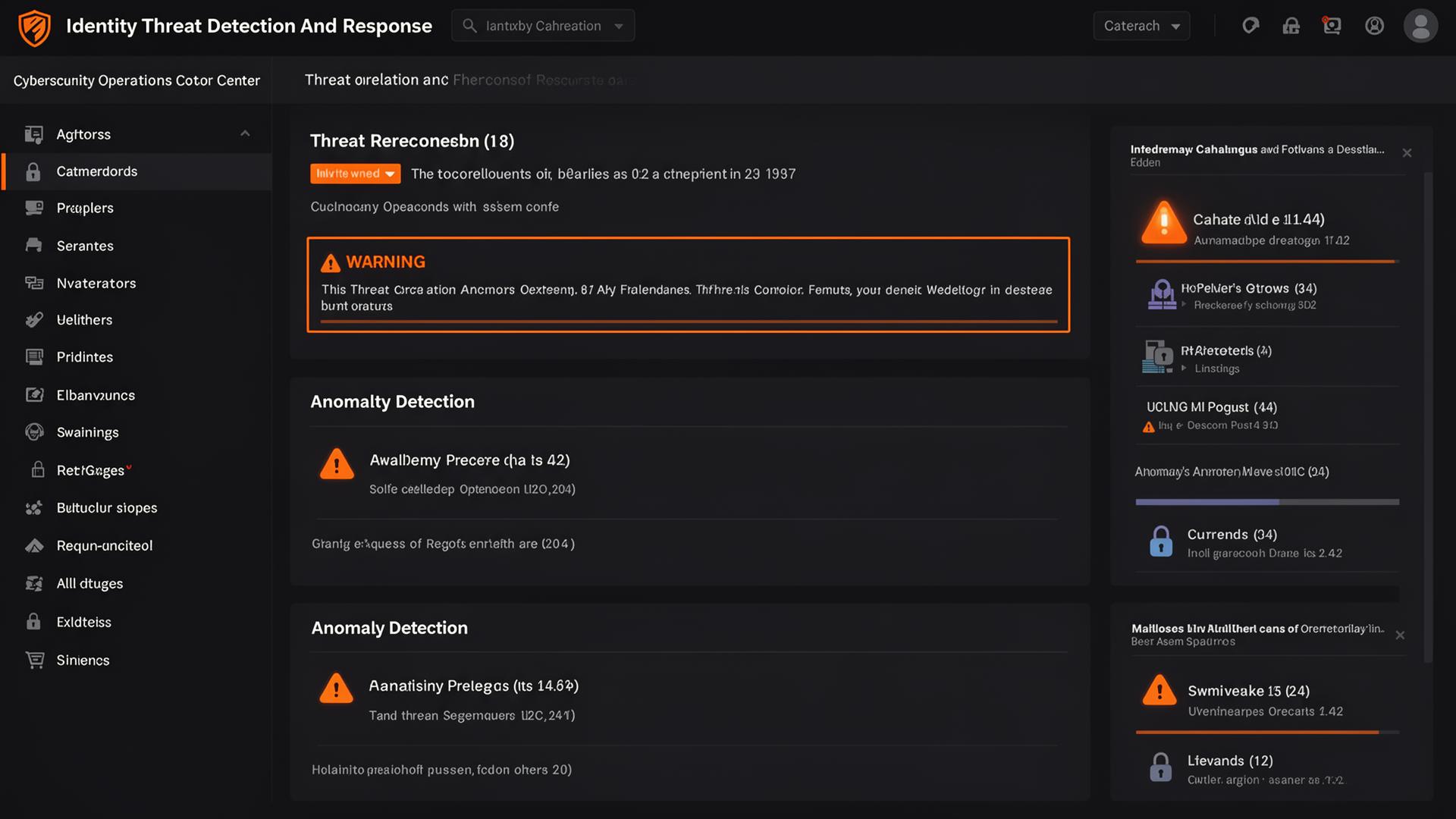
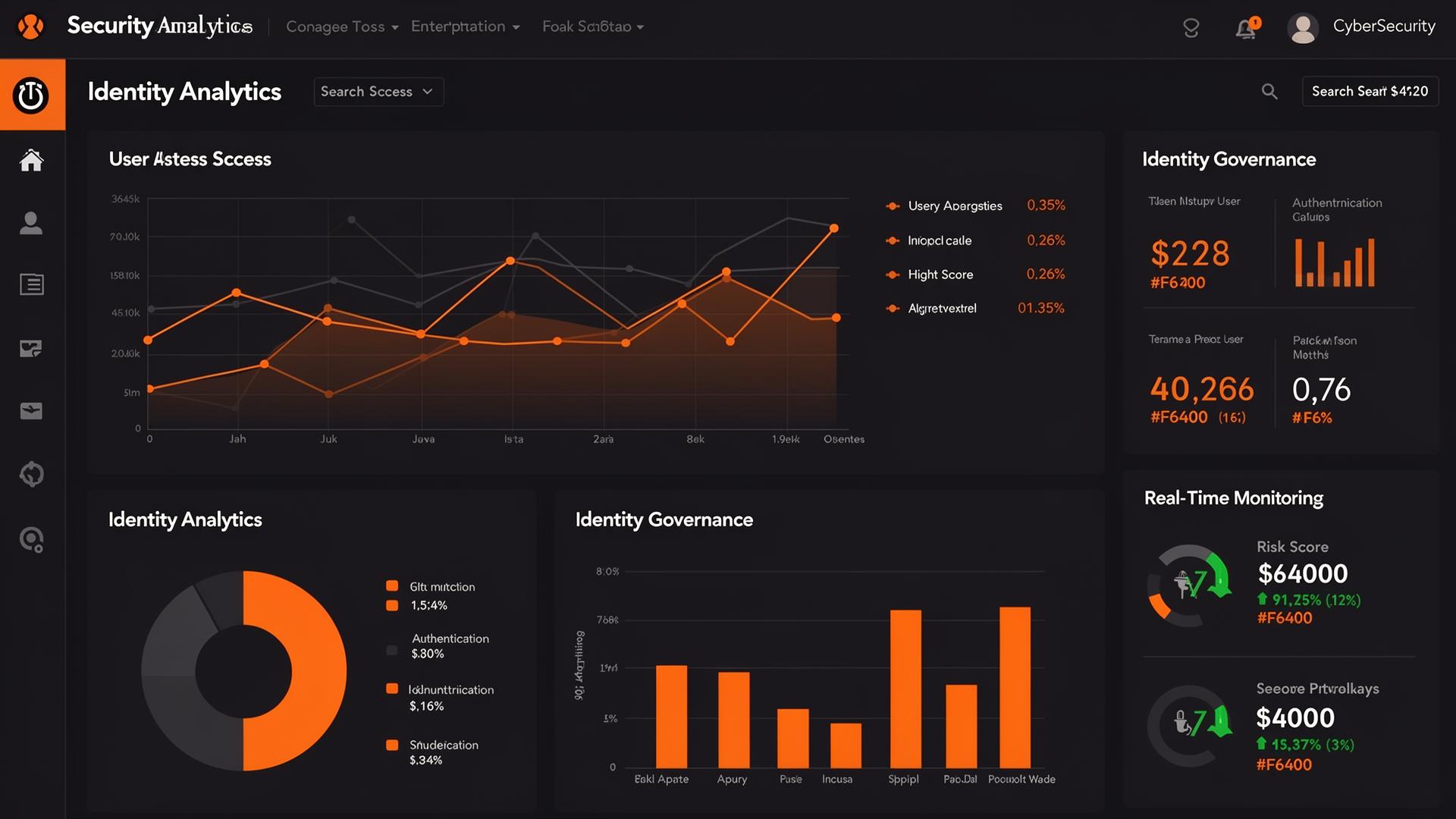
Compromised identities are now the primary attack vector. Detect credential misuse, privilege escalation, and identity-driven lateral movement before damage occurs.
Stolen credentials, excessive privileges, dormant accounts, and misused tokens allow attackers to blend in with legitimate users. Our ITDR solution brings identity activity to the center of detection and response, enabling rapid containment of account compromise, insider misuse, and privilege abuse.
Identity-based threat correlation across IAM, directories, and cloud
Insider threat detection with behavioral analytics
Automated remediation via UEBA and anomaly detection
SOAR integration for rapid identity incident response
Detect
Correlate
Analyze
Respond
Optimize
∞
Threat Signals
24/7
Detection
<5m
Response Time
360°
Coverage
Platform Expertise
Enabling Advanced ITDR Across Leading IAM Platforms
Microsoft (Entra ID / Defender for Identity)
Okta
Ping Identity
IBM (IBM Security Verify)
RSA
One Identity
SailPoint
Saviynt
Capabilities
What We Deliver
Identity Threat Correlation
Suspicious authentication pattern analysis
Lateral movement tracking via identity usage
Proactive identity-focused threat hunting
Technologies
CrowdStrike
Microsoft Sentinel
Splunk
Compliance
MITRE ATT&CK
NIST
SOC 2
Insider Threat Detection
Excessive data access monitoring
Privilege misuse beyond assigned roles
Dormant account reactivation alerts
Technologies
Varonis
Exabeam
Securonix
Compliance
SOC 2
ISO 27001
HIPAA
Automated Remediation (SOAR)
Automated account suspension workflows
Forced credential resets
Privilege revocation actions
Technologies
Palo Alto XSOAR
Splunk SOAR
ServiceNow
Compliance
NIST
SOC 2
PCI DSS
Why It Matters
Key Benefits
95%
95%
Threat detection rate
Early Detection of Identity-Based Threats
Implement identity threat detection across IAM systems, directories, cloud platforms, and endpoints to uncover attacks that traditional security tools miss. Gain visibility into compromised accounts, privilege misuse, and lateral movement at an early stage.
Across identity-based attack vectors
<5min
<5min
Containment time
Faster Containment of Compromised Identities =
Deploy automated response workflows that trigger immediate actions such as account suspension, credential resets, and privilege revocation. Reduce response time and limit the impact of identity-driven attacks without manual intervention.
Automated via SOAR integration
88%
88%
Insider threat reduction
Reduced Insider and Privilege Misuse Risks
Leverage behavioral analytics to detect anomalies such as excessive data access, dormant account reactivation, and unauthorized privilege usage. Identify and mitigate insider threats before they escalate into major incidents.
Based on behavioral analytics implementations
360°
360°
Identity coverage
Advanced ITDR with Argus
Leverage our flagship Argus platform to deliver advanced identity threat detection and response across multiple IAM providers. Correlate identity signals across environments to detect complex attack patterns and enforce consistent response actions without dependency on a single ecosystem.
Across IAM, cloud, endpoints, and directories
* Based on internal client assessments and project outcomes.
Ready to Secure Your Enterprise Identities?
Talk to our identity security architects about your specific access management challenges.
Identity threats require continuous evaluation rather than periodic review. We implement ITDR through a layered strategy that combines detection intelligence, behavioral analytics, and automated containment.
Typical Timeline: 4–6 Weeks
Identity Threat Landscape Assessment
We analyze your identity infrastructure, directory services, IAM platforms, and threat exposure to understand how identities are managed and where risk accumulates. This establishes detection baselines and prioritized risk visibility.
Threat assessment
Risk mapping
Gap analysis
01
01
Detection Rule Engineering
We build custom detection rules and correlation logic tailored to your identity environment, covering authentication anomalies, privilege escalation patterns, and lateral movement indicators.
Detection rules
Correlation logic
Alert tuning
02
02
Behavioral Analytics Deployment
We implement UEBA to profile normal behavior for users and service accounts. Deviations — impossible travel, unusual login times, abnormal data access — are flagged in real time for investigation.
UEBA deployment
Baseline profiling
Anomaly detection
03
03
Automated Response Integration
We connect SOAR platforms to trigger containment actions on high-risk identity events — account suspension, credential resets, privilege revocation, and session termination.
SOAR playbooks
Response workflows
Escalation paths
04
04
Continuous Optimization
We continuously refine detection rules, behavioral baselines, and response playbooks as threats evolve and your identity environment changes.
Rule tuning
Threat intel updates
Performance metrics
05
05
Where It Applies
Enterprise Use Cases
Enterprise
Enterprise Security Operations
trengthen SOC capabilities by implementing identity-focused threat detection and automated response across large-scale environments. Correlate identity signals with security events to improve detection accuracy and enable faster, more effective incident response.
Detected 95% of identity-based attacks missed by traditional SIEM.
Learn more
Cloud
Cloud & Hybrid Environments
Monitor and secure identity activity across multi-cloud and hybrid infrastructures by deploying unified threat detection and correlation. Gain visibility into access patterns, detect anomalies, and respond to identity-based threats across distributed environments.
Reduced identity incident response time from hours to under 5 minutes.
Learn more
Healthcare
Healthcare & Life Sciences
Protect patient data and clinical systems by detecting compromised credentials, unauthorized access, and insider risks. Implement identity monitoring and response controls aligned with healthcare compliance and data protection requirements.
Prevented 12 credential-based breaches in the first 90 days.
Learn more
Finance
Financial Services
Detect and respond to identity-driven threats such as account takeover, privilege escalation, and lateral movement within banking environments. Strengthen fraud prevention and secure access to critical financial systems through continuous identity monitoring.
Identified and contained 3 active insider threats within first month.
Learn more
Why Us
Why Enterprises Choose Genix Cyber
30+
Years Security Experience
100+
Security Engagements
1:1
Dedicated Security Architect
24/7
Monitoring Capability
ISO
Enterprise-Grade Methodology
Common Questions
FAQs About ITDR
What is Identity Threat Detection and Response (ITDR)?
ITDR is a security discipline focused on detecting and responding to threats that exploit identity infrastructure — compromised credentials, privilege escalation, lateral movement, and insider misuse. It brings identity activity to the center of threat detection.
How does ITDR differ from traditional SIEM?
Traditional SIEM collects logs from many sources but often lacks identity context. ITDR specifically correlates identity signals — authentication events, privilege changes, access patterns — to detect identity-driven attacks that SIEM alone may miss.
What is UEBA and how does it work?
User and Entity Behavior Analytics (UEBA) establishes baselines of normal behavior for users and service accounts. When activity deviates from these baselines — unusual login times, impossible travel, abnormal data access — alerts are triggered for investigation.
Can ITDR detect insider threats?
Yes. ITDR monitors behavioral indicators like excessive data access, privilege misuse, dormant account reactivation, and access outside defined business functions. These signals help detect both malicious insiders and compromised accounts.
How does ITDR integrate with existing security tools?
ITDR integrates with IAM platforms, directories, SIEM, SOAR, EDR, and cloud security tools. It enriches alerts with identity context and triggers automated response actions through existing orchestration platforms.
What is the typical deployment timeline?
Initial ITDR deployment typically takes 4-6 weeks, including threat assessment, detection rule engineering, UEBA deployment, and SOAR integration. Continuous optimization follows to refine detection accuracy over time.